
Empower
Non-Devs with Low-Code Integrations
Non-Devs with Low-Code Integrations

Intuitive low-code designer
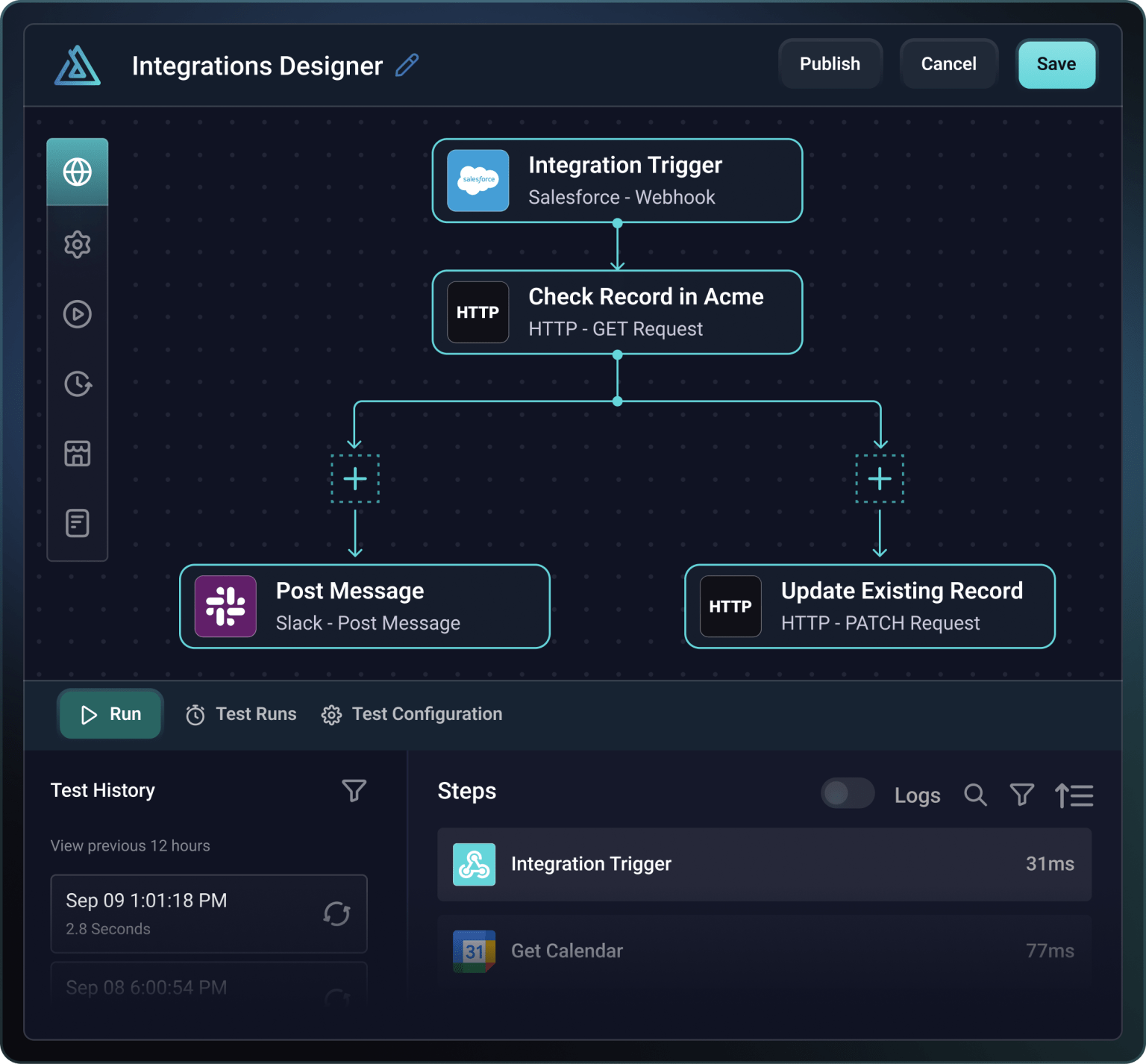
Build with integration templates
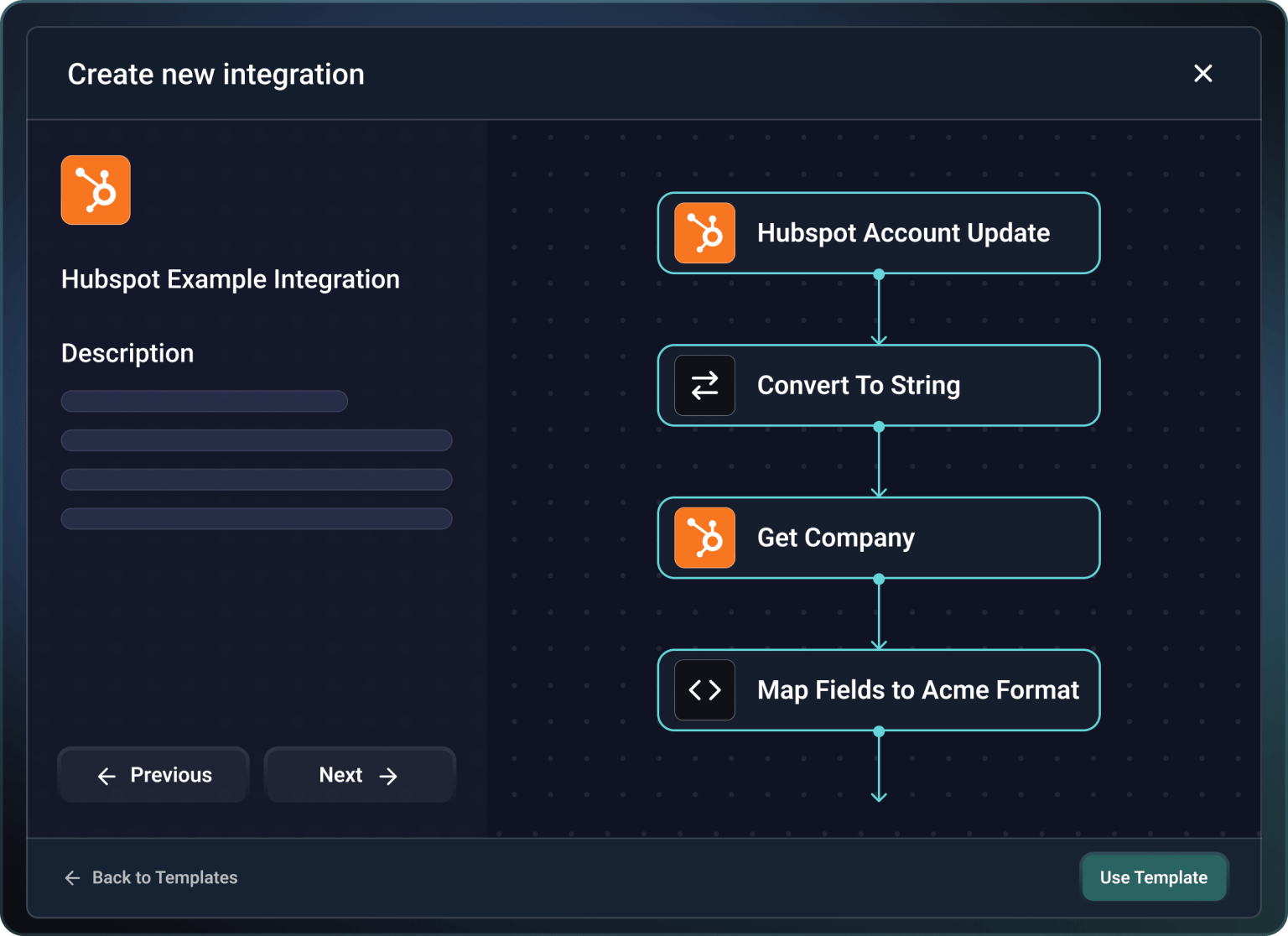
Configure and deploy integrations

Support integrations with ease
They can also see when there are issues and jump right in with config, logging, and alert data to get things sorted.








Common questions
Empowering non-dev teams with low-code integration tools dramatically reduces the burden on your engineering resources. While technical support staff or customer success teams build and configure integrations using Prismatic's intuitive drag-and-drop designer, your devs can focus on core product development and building new integration capabilities that benefit your broader customer base.
Non-devs can handle common integration patterns using 190+ pre-built connectors, configure customer-specific instances, and deploy integrations without engineering. This enables you to respond to customer requests faster, deliver integrations up to 10x faster, and save significant engineering time. Technical and non-technical team members contribute effectively, creating a true cross-functional integration team.
Prismatic reduces developer workload by handling the infrastructure that typically consumes engineering resources: authentication flows, OAuth management, multi-tenant deployment, monitoring, security, compliance, and more. Instead of building and maintaining these foundational elements, your developers can focus on differentiated integration logic. The platform provides 190+ pre-built connectors with fully-managed authentication, eliminating the need to create custom API connectors for common apps.
For custom and niche apps, you can create connectors that work across multiple customers. Non-dev teams can handle deployment, configuration, and customer-specific customizations. Prismatic beautifully supports a model where technical support staff configure integration instances, software engineers build new integrations when needed, and support staff monitor day-to-day operations – freeing engineers for higher-value work.
Yes, Prismatic provides multiple resources to simplify integration development. The platform includes 190+ pre-built connectors for popular applications across categories such as CRMs, ERPs, marketing platforms, cloud storage, and databases. You can use integration templates as starting points for common patterns, then customize them for specific needs. For example, you could provide a basic Salesforce integration template that customers use as a foundation for their Salesforce workflows.
The platform also includes reusable components for common logic patterns and configuration wizards. When you need functionality beyond pre-built options, you can develop custom connectors using Prismatic's TypeScript SDK – the same SDK used internally to build the connector library – and those custom connectors become reusable templates for future integrations.